Keywords: self-doubt, yoga philosophy, Bhagavad Gita, Upanishads, Yoga Sutras, mindfulness, mental wellness, spiritual growth, meditation, self-awareness
Introduction: Why Do We Doubt Ourselves?
Have you ever questioned your career, your relationships, your purpose, or even your faith?
Perhaps you’ve asked yourself:
- Am I making the right decision?
- Am I good enough?
- Why is this happening to me?
- What is my purpose in life?
- Does the universe really have a plan for me?
- Who am I beyond my successes and failures?
These questions are universal. Every human being experiences self-doubt at different stages of life. It may arise after failure, during uncertainty, or even in moments of success when we begin questioning whether we truly deserve what we have.
Today, self-doubt is often viewed as something to eliminate. Social media promotes constant confidence and certainty, making us feel that questioning ourselves is a weakness.
Yoga offers a different perspective.
From the teachings of the Vedas, Upanishads, Bhagavad Gita, and Yoga Sutras, we learn that doubt is neither good nor bad. It is a natural phase of inner evolution. When approached with awareness, it becomes the doorway to wisdom, self-discovery, and spiritual growth.
Self-Doubt Is a Universal Human Experience
No one is born with complete certainty.
Students doubt their abilities before exams.
Professionals question their career choices.
Parents wonder if they are raising their children correctly.
Entrepreneurs question every decision.
Even spiritual seekers question their practice.
The greatest heroes in Indian philosophy also experienced doubt.
Arjuna, one of the greatest warriors, stood on the battlefield of Kurukshetra overwhelmed by confusion, fear, and self-doubt. His inner conflict became the setting for the Bhagavad Gita, one of humanity’s greatest spiritual dialogues.
His story reminds us that doubt is not a sign of weakness. It is often the beginning of transformation.
Samśaya (Doubt) in the Yoga Sutras
Patanjali clearly identifies Samśaya (doubt) as one of the nine obstacles (Antarayas) that disturb the mind.
Yoga Sutra 1.30
“Vyadhi styāna saṁśaya pramāda ālasya avirati bhrānti-darśana alabdhabhūmikatva anavasthitatvāni citta-vikṣepāḥ te’ntarāyāḥ.”
Doubt weakens the mind because it divides our energy.
One part wants to move forward.
Another wants to stay where it feels safe.
When this conflict continues for too long, it creates anxiety, overthinking, procrastination, and emotional exhaustion.
Yoga does not ask us to suppress doubt. Instead, it teaches us to develop awareness so that doubt does not control our actions.
The Bhagavad Gita: From Confusion to Clarity
At the beginning of the Bhagavad Gita, Arjuna experiences a complete emotional breakdown.
His hands tremble.
His mouth becomes dry.
He cannot hold his bow.
He questions everything he once believed.
Rather than criticizing Arjuna, Lord Krishna patiently guides him toward clarity.
One of the most significant verses is:
Bhagavad Gita 4.40
“Ajñaś cāśraddadhānaś ca saṁśayātmā vinaśyati.”
“The ignorant, the faithless, and the one constantly consumed by doubt cannot attain peace.”
This does not mean we should never question.
Krishna himself encourages inquiry.
In Bhagavad Gita 4.34, he advises seekers to approach wise teachers with humility, ask sincere questions, and learn through reflection and experience.
The teaching is simple:
Question sincerely.
Learn continuously.
Then act courageously.
The Upanishads: Questions Are Sacred
The Upanishads are conversations filled with profound questions.
They never discourage inquiry.
Instead, they celebrate it.
Nachiketa in the Katha Upanishad
A young boy named Nachiketa meets Yama, the Lord of Death.
Instead of asking for wealth or comfort, he asks:
“What happens after death?”
“What is the true Self?”
His courage to question leads him to one of the deepest teachings in Indian philosophy—that the Self (Ātman) is eternal, beyond birth and death.
His story reminds us that real wisdom begins with honest questions.
The Kena Upanishad
The Kena Upanishad begins by asking:
“By whom is the mind directed? By whom does speech function? Who enables the eyes to see?”
Rather than offering immediate answers, it invites the seeker into contemplation.
Yoga is therefore not blind belief.
It is disciplined inquiry leading to direct experience.
Why We Experience Self-Doubt
From a yogic perspective, self-doubt arises because we identify too strongly with changing aspects of life.
We identify ourselves as:
- our profession,
- our achievements,
- our appearance,
- our relationships,
- our possessions.
When these change, our identity feels threatened.
The Upanishads remind us:
Tat Tvam Asi — You Are That.
Your deepest identity is not your job, your social status, or your past mistakes.
It is pure awareness—the Ātman.
The more we identify with the temporary, the stronger self-doubt becomes.
The more we connect with our true nature, the greater our inner stability.
Mindfulness: Observing Without Judgment
Modern psychology has shown that mindfulness reduces stress, anxiety, and excessive rumination.
Yoga has taught this for thousands of years.
Mindfulness means observing thoughts without immediately believing them.
When self-doubt appears, instead of saying,
“I am not good enough,”
practice noticing,
“A thought of self-doubt is arising.”
This small shift creates space between you and your thoughts.
That space is where freedom begins.
Shraddhā: Faith Through Experience
One of the most misunderstood Sanskrit words is Shraddhā.
It is often translated as faith.
But yogic faith is not blind belief.
It is confidence born from direct experience.
Yoga Sutra 1.20 teaches that Shraddhā supports progress on the path.
Every day you practice asana, pranayama, meditation, or self-study, you strengthen trust—not because someone told you to believe, but because you experience change within yourself.
This is why regular practice is more powerful than occasional inspiration.
Practical Yogic Tools for Overcoming Self-Doubt
Self-doubt cannot always be solved by thinking more. Sometimes the mind needs to become quieter before it becomes clearer.
Some practices that can help include:
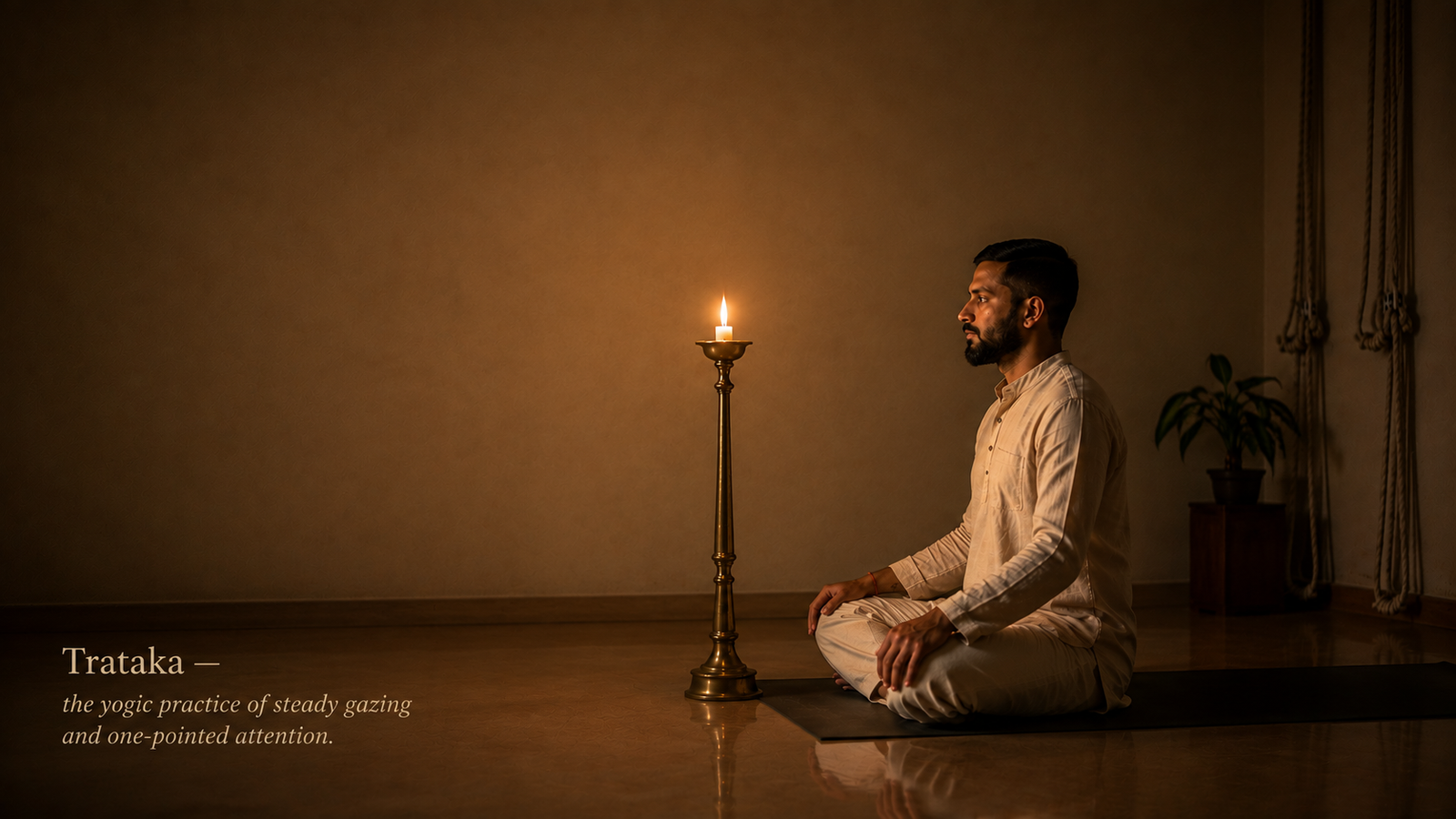
- Daily meditation to cultivate awareness.
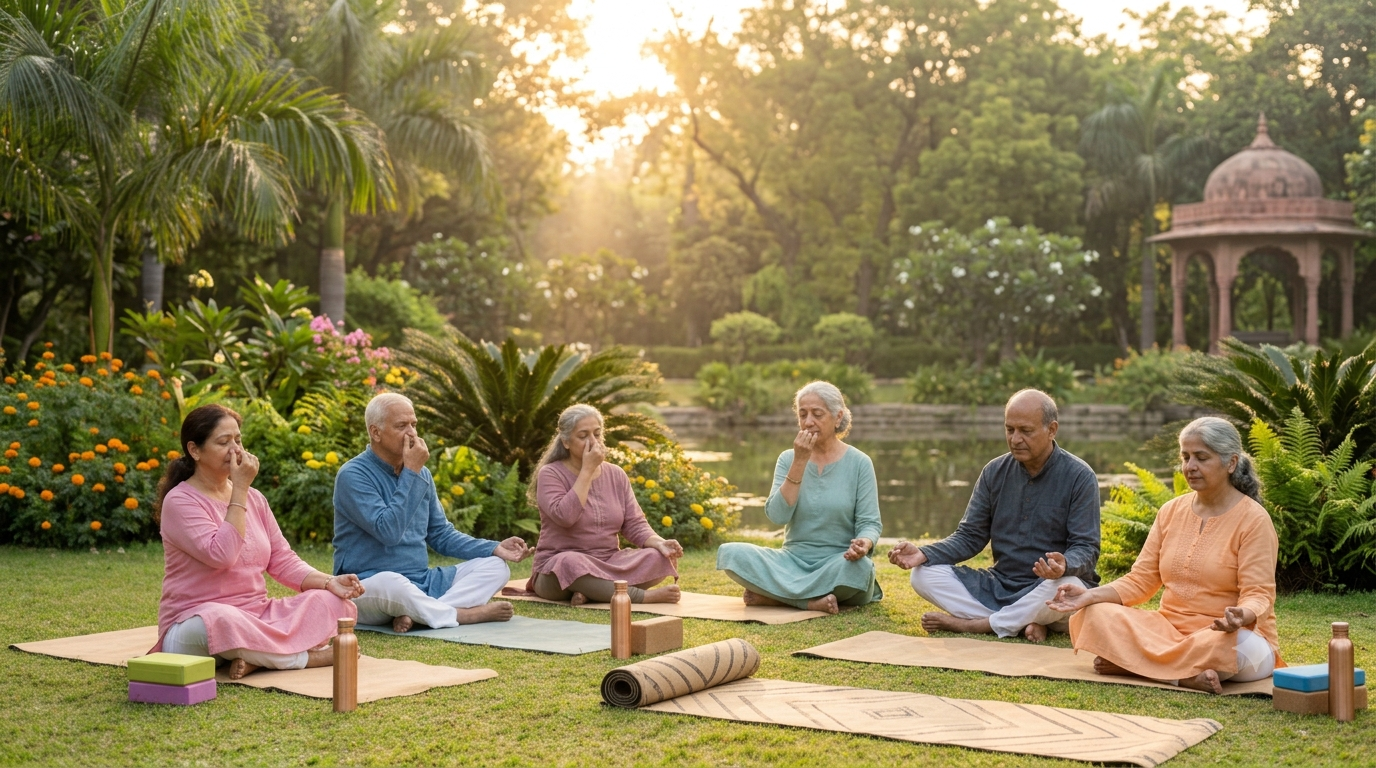
- Anulom Vilom (without breath retention) to calm the nervous system.
- Journaling with the question: “What is this doubt trying to teach me?”
- Svādhyāya (self-study) through the Bhagavad Gita or Upanishads.
- Seva (selfless service), which shifts attention from the ego to contribution.
- Consistent yoga practice to steady both body and mind.
The goal is not to eliminate doubt overnight, but to stop letting it dictate your choices.
Self-Doubt Can Become Discernment
Yoga distinguishes between Samśaya (paralyzing doubt) and Viveka (wise discernment).
Paralyzing doubt keeps asking the same question without moving.
Discernment asks the question, reflects deeply, and then acts with awareness.
Growth requires courage, not certainty.
No great teacher, artist, scientist, or yogi had all the answers before taking the next step.
A Lesson from Nature
Nature offers one of yoga’s greatest teachings.
A seed spends time hidden beneath the soil before it sprouts.
From the outside, nothing appears to be happening.
Yet beneath the surface, growth has already begun.
Our lives often unfold in the same way.
Periods of uncertainty are not always signs that we are lost.
Sometimes they are the quiet seasons in which deeper roots are growing.
The Journey from Self-Doubt to Self-Knowledge
The Vedas encourage us to seek truth.
The Upanishads encourage us to question deeply.
The Bhagavad Gita teaches us to act with wisdom.
The Yoga Sutras teach us to steady the mind.
Together, they reveal a timeless message:
Self-doubt is not the end of the journey.
It is often the beginning.
Every sincere question can become a doorway to greater self-awareness, mental wellness, and spiritual growth—if we are willing to observe, practice, and keep moving forward.
The purpose of yoga is not to create a life without questions. It is to cultivate a mind capable of meeting those questions with clarity, courage, and compassion.
Final Reflection
The next time self-doubt appears, pause before judging it.
Ask yourself:
- Is this doubt protecting me from genuine danger, or simply from growth?
- What attachment or fear is this doubt revealing?
- What would I do if I trusted my deepest Self instead of my loudest fear?
Yoga reminds us that beneath every layer of confusion lies a still, wise, and unchanging awareness.
When we return to that awareness through practice, mindfulness, and self-inquiry, self-doubt slowly transforms into self-understanding.
As the ancient prayer from the Bṛhadāraṇyaka Upanishad reminds us:
“Asato mā sad gamaya. Tamaso mā jyotir gamaya. Mṛtyor mā amṛtaṁ gamaya.”
“Lead me from the unreal to the Real. From darkness to Light. From mortality to Immortality.”
May every doubt become an invitation to know yourself more deeply. May your yoga practice guide you from confusion to clarity, from fear to freedom, and from self-doubt to Self-realization.